
I have to admit I can’t do anything without an agent anymore. But why should I? Agents give me superpowers. Whether I’m working on our roadmap, triaging issues, digging through funnel numbers, or writing positioning docs and blog posts like this one, I have an agent by my side from start to finish.
Until recently, all my agent conversations lived in Claude Desktop, and when I wanted to share something with my team, I moved it into Google Docs. My teammates would leave comments and suggest edits. Depending on the feedback, I would copy what they said back into Claude and ask for another pass. Then I’d paste the new version back into the doc.
I would repeat these steps until it shipped (or until I gave up). What a broken process. I wanted my teammates’ input, but I also desperately needed my agent to use their feedback to improve the work.
Let’s be honest about how that draft came together. If an agent helped with the heavy lifting, why leave it out when the team starts giving feedback? Get the humans and the robot into the same conversation.
Of course, Google Docs and Notion have agents, too. But I’m talking about the agent I’ve already been working with, not a new one meeting the project halfway through. Let my teammates join the same conversation instead of starting another one.
How we work now
I did use Zed for a lot of my work, especially on our website. But I kept missing what made Google Docs worth the pain: comments, @mentions, and a way to give feedback without changing the content. Delta has all of that now, with the agent right there alongside us. And it feels so good to use. It’s completely changed how my team and I work together.
We now use Delta for pretty much everything from internal docs and planning to website copy and blog posts. (We keep our internal docs in a repo, too. I let the agent handle the Git part.)
We can cover a long agent reply or a draft with comments, then go back and forth with each other on the parts we disagree about. When we’re ready, we send the whole discussion to the agent. Nobody has to turn someone else’s feedback into a new prompt. You disagree with my agent? Go tell it yourself!
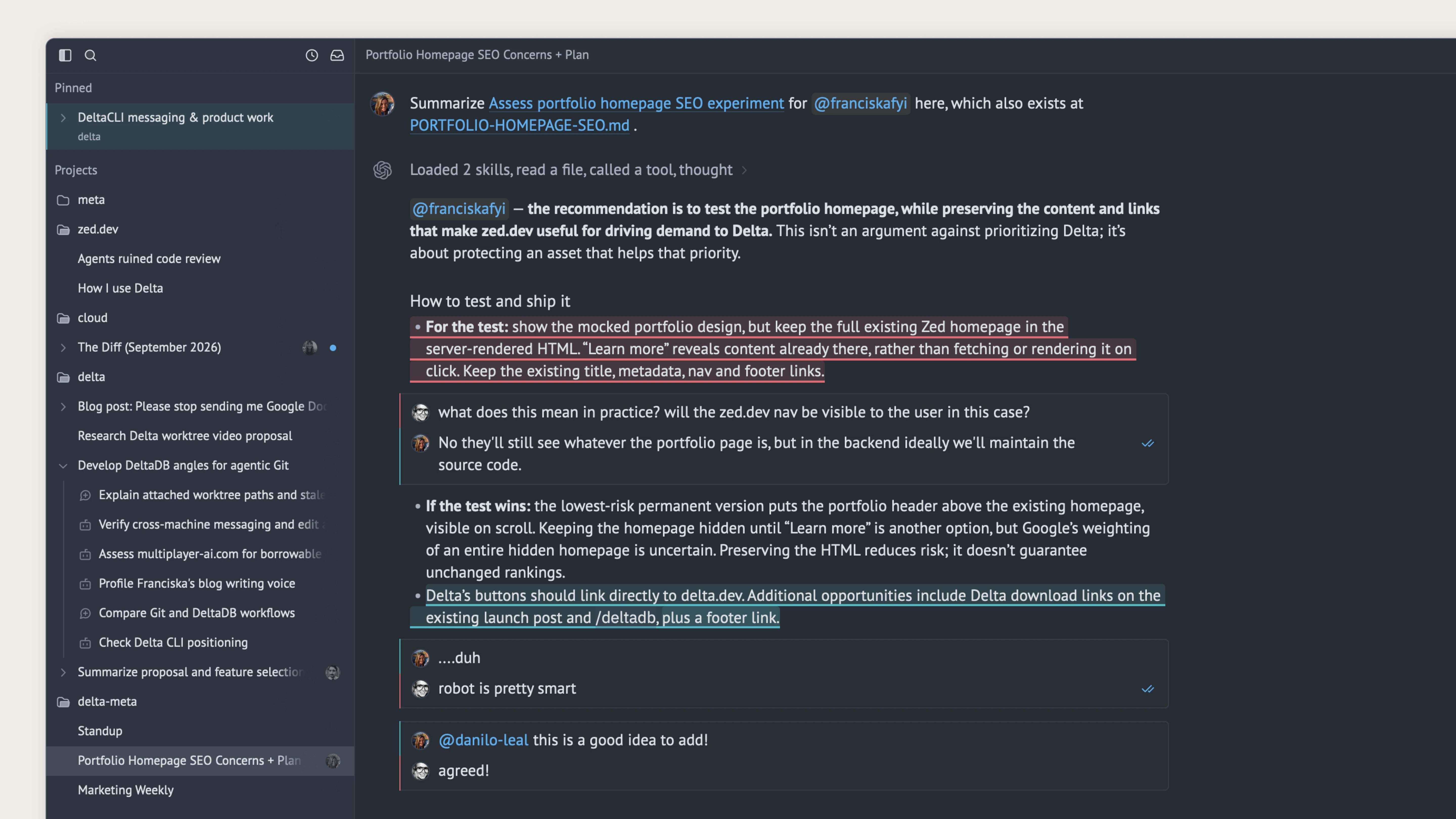
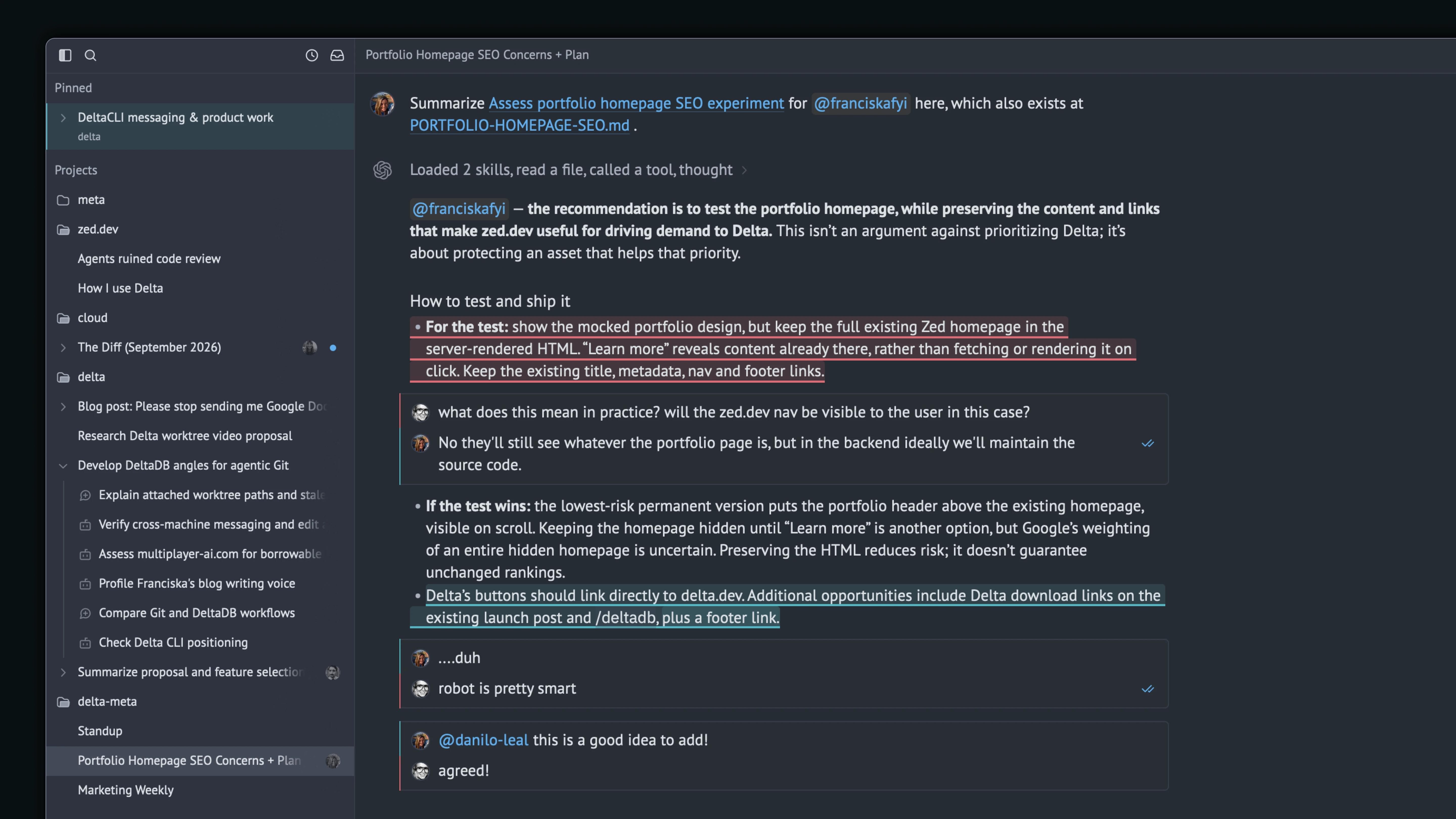
When I need Katie’s input, I @mention her and we chat in the thread. Not every message needs to be an instruction for the agent. Now that Delta has notifications, we have one less excuse to drag the conversation into Slack and leave the robot behind. We can keep the whole conversation here. (And typing : for emojis was a game changer.)
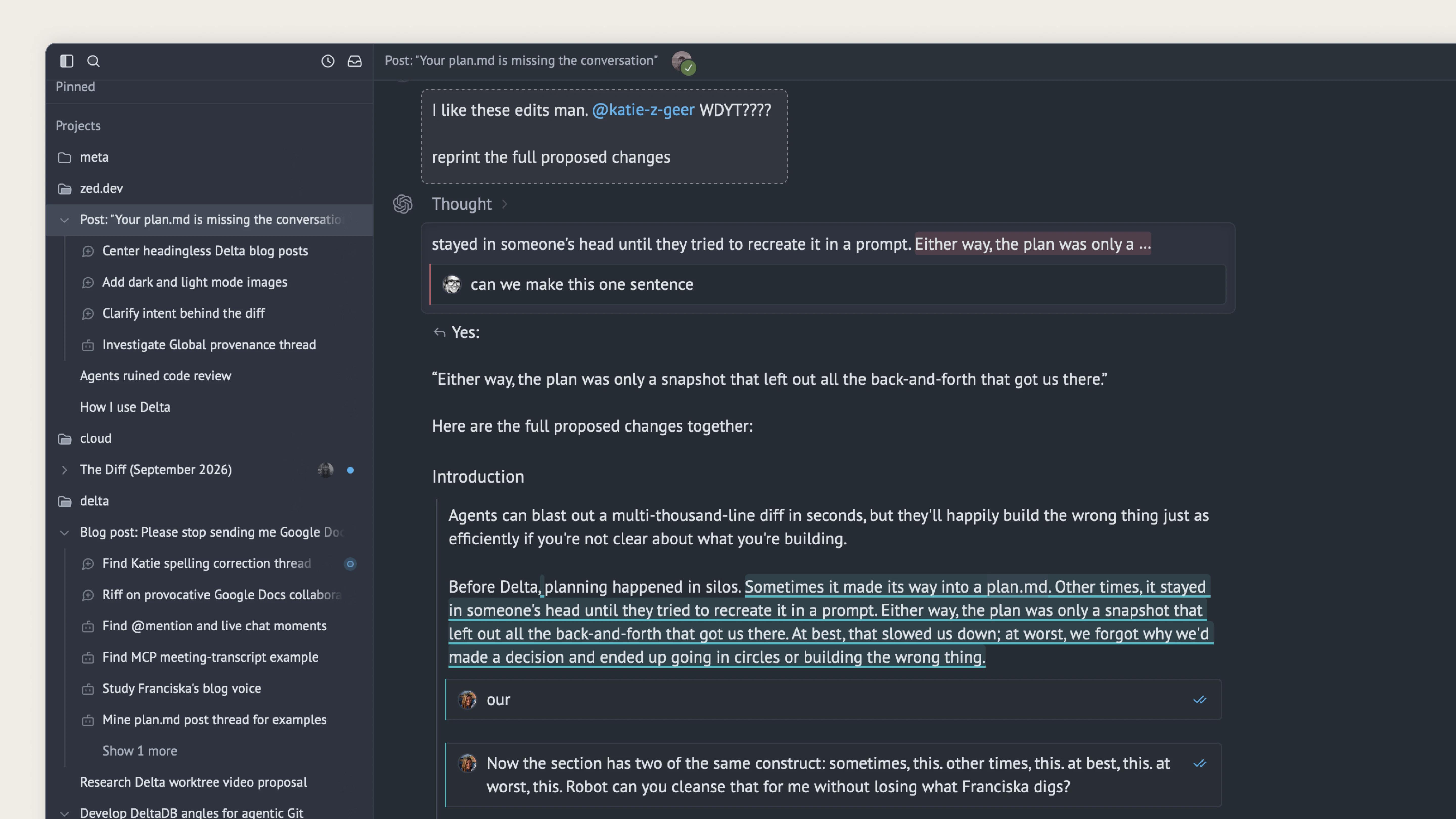
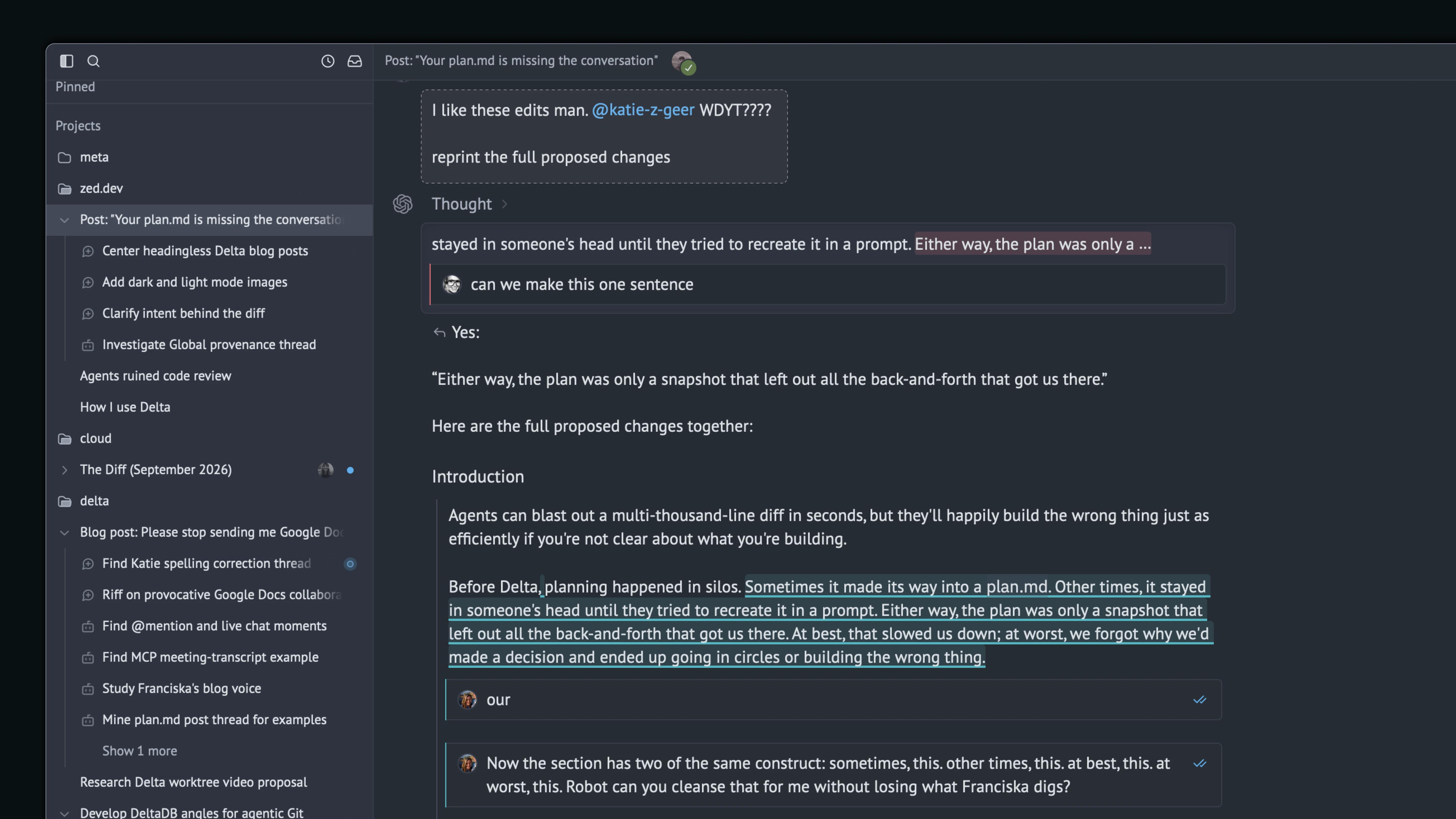
The agent can look things up as we go. We use it with GitHub, Granola, Amplitude, Linear, Hex, and more, plus plenty of useful (and less useful) skills we’ve accumulated. When we’re debating what to do next, we can ask the agent to check what we actually agreed in the meeting, or pull the numbers we’re arguing about. We can question its answer together and decide what to do with it.
If a headline or a positioning question needs more exploring, we take it into a subthread. We can riff with an agent there without filling the main conversation with twenty alternatives, then we bring back what we like.
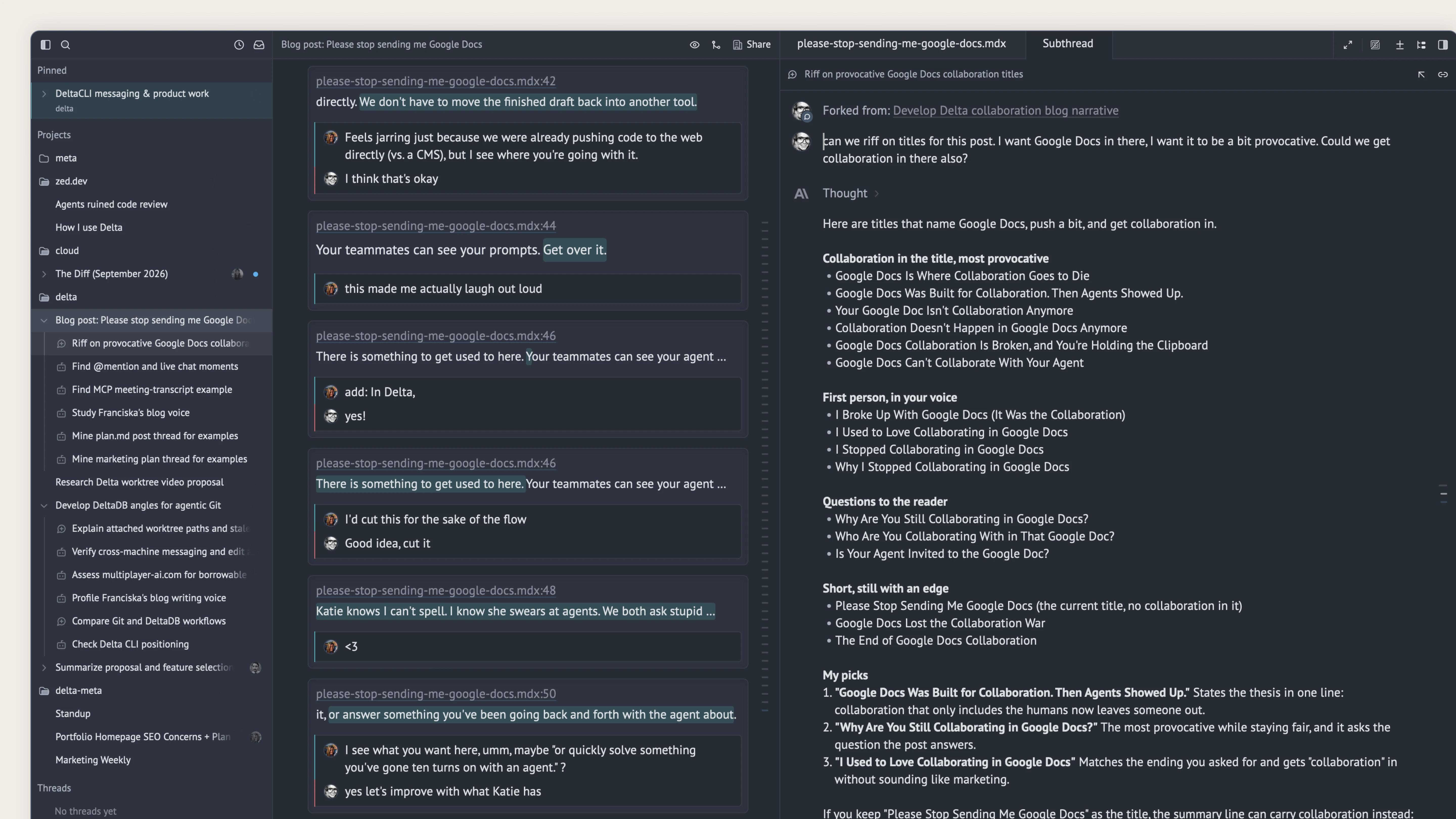
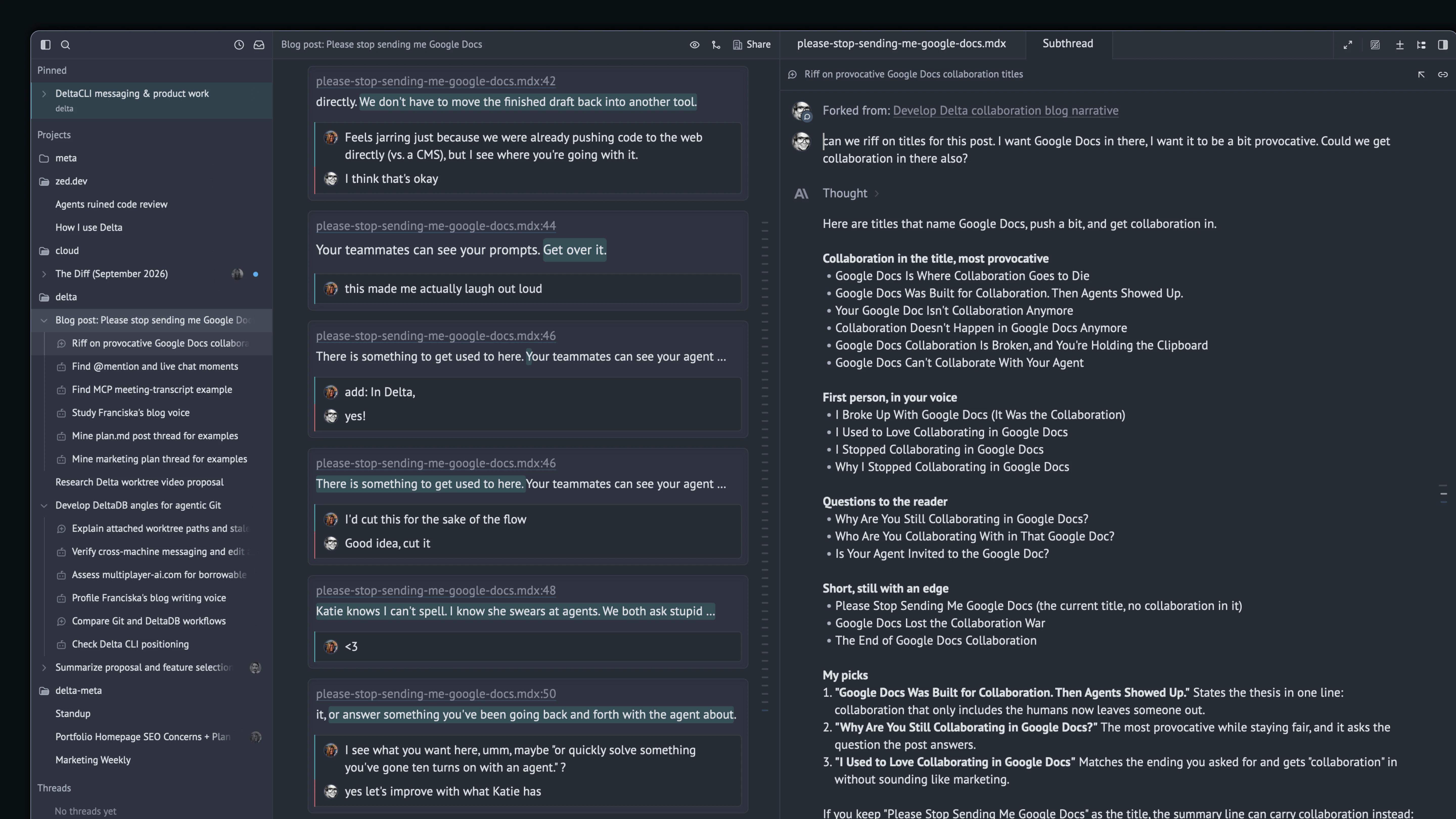
And when we’re done, we can ask the agent to land changes to the website directly. We don’t have to move the finished draft back into another tool.
Your teammates can see your prompts. Get over it.
In Delta, your teammates can see your agent conversations, your prompts, your stupid questions. The half-formed idea you would normally clean up before sharing. The thing you asked the agent to explain three times.
Katie knows I can’t spell. I know she swears at agents. We both ask stupid questions. We don’t think any less of each other (I think).
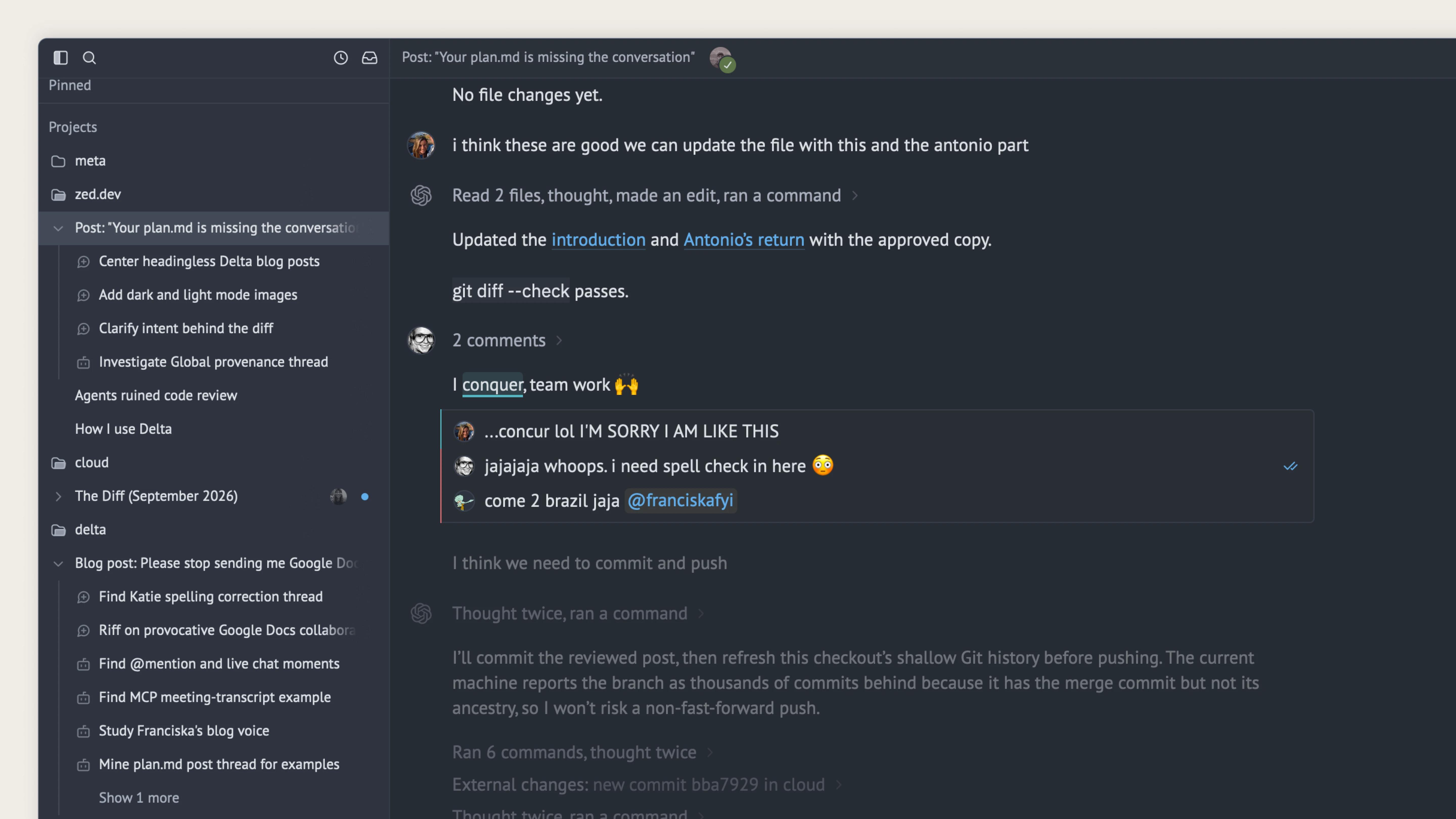
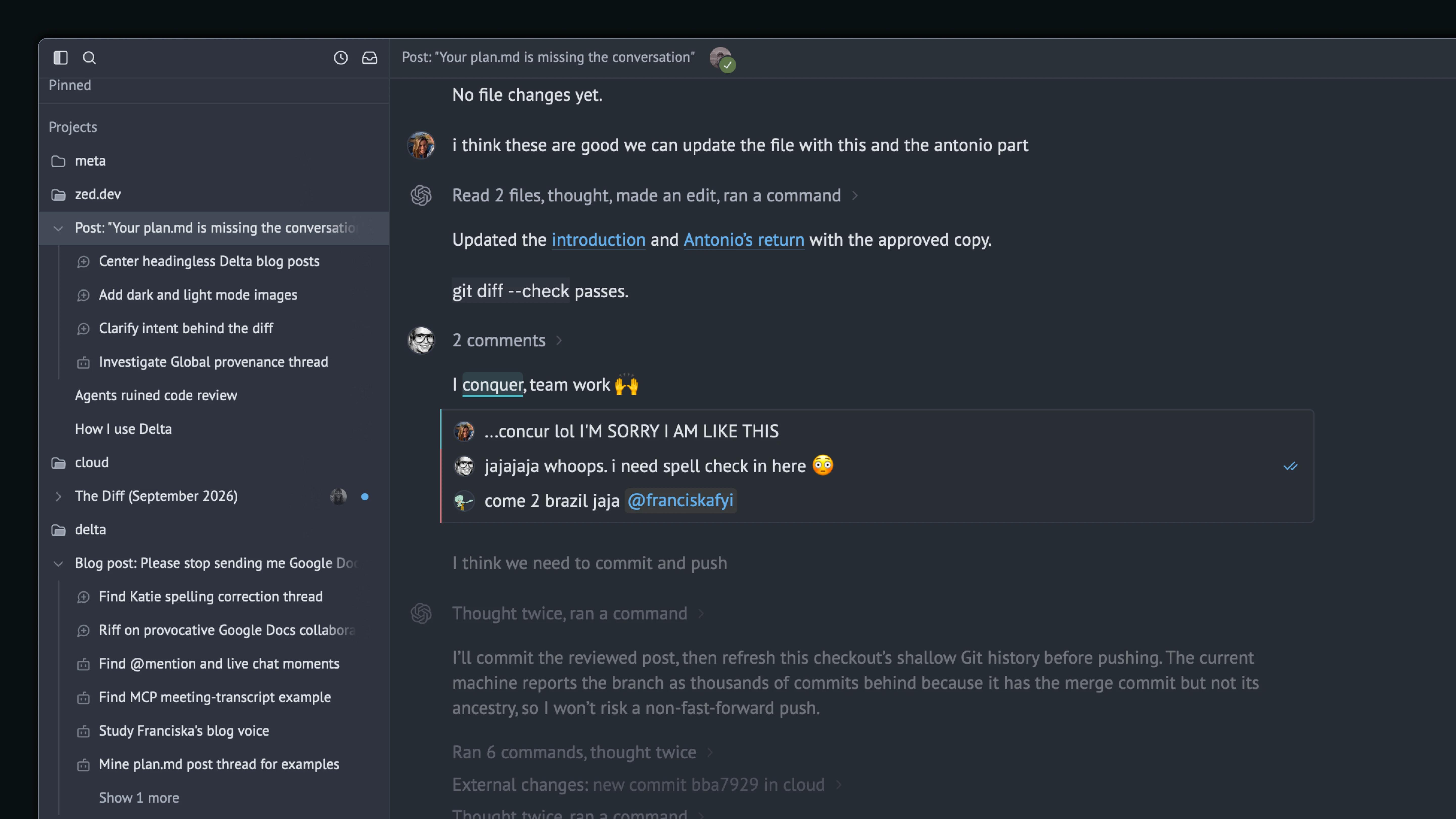
I get why that might be a hurdle. Sharing a polished doc feels safer than letting someone watch you figure things out. But that’s also when they can help. A teammate can question an assumption before you’ve built a whole plan around it, or quickly solve something you’ve spent ten turns on with an agent.
You also don’t have to clean up the Claudespeak before asking for feedback. Everyone can see which model was used. We can discuss whether the idea is any good before worrying about how it’s written.
For me, that’s worth a little embarrassment. But if you’d rather keep the darkest corners of your agent conversations between you and the robot, start privately. Then ask the agent in a new thread to pull in the useful, non-embarrassing parts and share that with your teammates.
Goodbye, Google Docs
I used to live in Google Docs because that’s where the collaboration was. Now I can’t imagine working without my team and the agent in the same room.
You don’t have to be an engineer to use an agentic coding tool. And if you work closely with engineers, there’s even less reason to keep your agent conversations in separate tools. Don’t take my word for it, though. Try it for yourself.
If you’re a developer, you might already be in Delta. Next time your PM sends you a Google Doc, copy-paste it into a thread and invite them in. Make that the last copy-paste. They’ll thank you later.

